
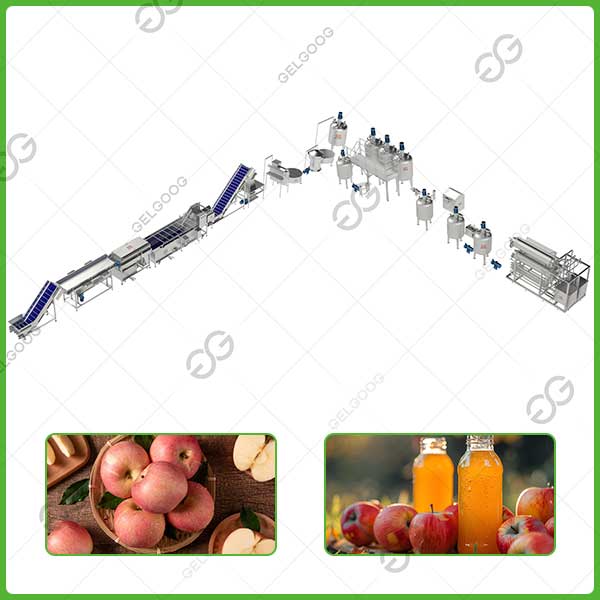
Apples offer a wide range of practical applications; beyond being consumed fresh, they can be processed into various products such as apple juice, concentrated apple juice, apple jam, dried apples, etc. Among these, apple juice—prized for its refreshing taste, convenience, and suitability for large-scale production—is extensively used in sectors including beverage manufacturing, food processing, and foodservice.
For companies planning to build an apple juice processing plant, the challenge of consistently transforming fresh apples into juice that meets specific product requirements is a critical aspect of production planning. A well-configured apple juice processing equipment integrates stages such as washing, crushing, juicing, filtering, sterilization, and filling—enabling businesses to enhance production efficiency while ensuring consistent product quality.
Apple Juice Main Processing Steps:
Raw material inspection and selection → Washing → Crushing → Juicing → Filtration → Homogenization (configured according to product requirements) → Degassing → Sterilization → Filling
1. Selection and Washing of Raw Materials
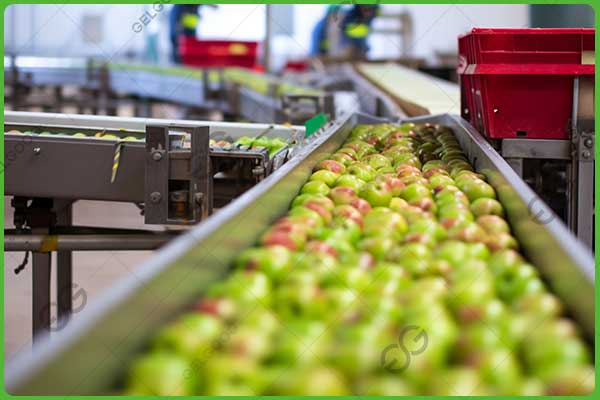
Upon entering the apple juice processing plant, fresh apples are inspected for ripeness, signs of decay, and surface damage; those unsuitable for processing are removed. Subsequently, an apple washing machine—utilizing water flow, spraying, or air bubbles—cleans the apples by removing surface soil, dust, and other impurities, ensuring the raw material is sufficiently clean for further processing.
2. Crushing and Juicing
After being washed, the apples enter a crushing unit, where they are broken down into particles suitable for juicing. The degree of crushing influences the subsequent juice yield. The crushed apple material then moves into a juicer, where the juice is separated from the pomace through mechanical pressing or similar methods.
3. Filtration and Homogenization
Apple juice contains fine pulp, fibers, and suspended particles, necessitating a filtration process. Depending on whether the final product is to be a clarified or cloudy apple juice, different types of filtration equipment—offering varying degrees of precision—and corresponding processing methods can be selected.
Homogenization is primarily used to improve the dispersion of fine particles within the juice, thereby reducing variations in mouthfeel caused by an uneven distribution of these particles.
4. Degassing, Pasteurization, and Filling
During processes such as crushing and juicing, air may become incorporated into the fruit juice. Degassing helps mitigate the adverse effects of dissolved oxygen on flavor, color, and certain nutritional components.
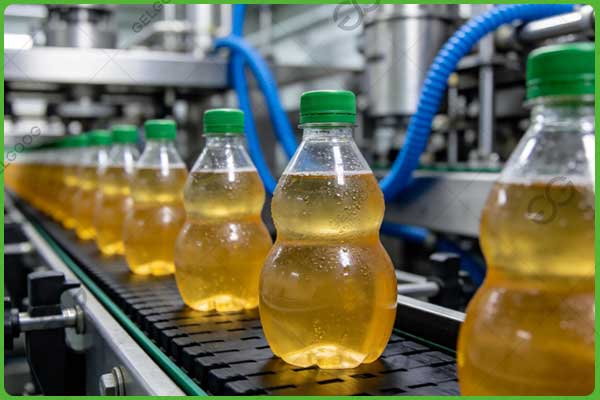
Subsequently, the juice undergoes pasteurization, where temperature and treatment duration are carefully controlled to manage microbial risks. The specific pasteurization parameters are determined based on the product’s characteristics, the type of packaging, and the desired shelf life. Following this treatment, the juice proceeds to the filling stage, where it can be packaged in bottles, cartons, or large-scale industrial containers, depending on the intended sales channel.
Apple Juice Processing Equipment Features:
1. Flexible line configuration to suit diverse production requirements
Apple juice processing enterprises often differ in terms of raw material handling capacity, types of finished products, packaging specifications, and investment budgets. Our apple juice processing plant can be customized based on a client’s target capacity, facility layout, and specific process requirements, seamlessly integrating equipment for washing, crushing, juicing, filtering, sterilization, and filling. Capacity can up to 5ton/h.
2. Flavoring and Blending Systems for Product Diversification
For companies planning to develop blended fruit juices or flavored beverages, a flavoring and blending system can be integrated into the apple juice processing plant. This system allows for the precise addition of ingredients—such as syrups, permitted natural flavorings, and vitamins—according to a specific recipe, and ensures that all components are thoroughly incorporated through controlled mixing.
3. UHT Sterilization and Aseptic Bulk Filling for Industrial Supply
If the apple juice is primarily intended for beverage manufacturers, food processing enterprises, or other industrial clients, consider implementing a UHT (Ultra-High Temperature) sterilization system alongside aseptic bulk filling equipment.
This approach utilizes thermal processing and aseptic filling technology to minimize microbiological risks, making it suitable for products that can be stored at ambient temperature for extended periods, provided they meet the necessary processing requirements.
4. CIP Systems: Enhancing Cleaning Management Efficiency
Fruit juice production involves multiple pieces of equipment and interconnected piping; inadequate cleaning can compromise the hygienic status of subsequent product batches. Apple juice processing equipment can be equipped with CIP (Clean-in-Place) systems, which follow preset programs to automatically clean and rinse pipelines, storage tanks, and other applicable equipment.





Reviews
There are no reviews yet.