
Fruit sorting is an essential step in the modern commercial post-harvest handling and processing of fruit. As a standardized industrial practice widely adopted across global fruit supply chains, it plays a critical role in fresh fruit packaging, deep processing, canning, juice production, and export trade. Unlike manual selection, professional fruit grading involves a standardized quality control process that unifies raw material specifications, eliminates defective items, and categorizes fruit by grade; this maximizes commercial value and lays the foundation for consistent product quality, safe distribution, and industrial-scale production.
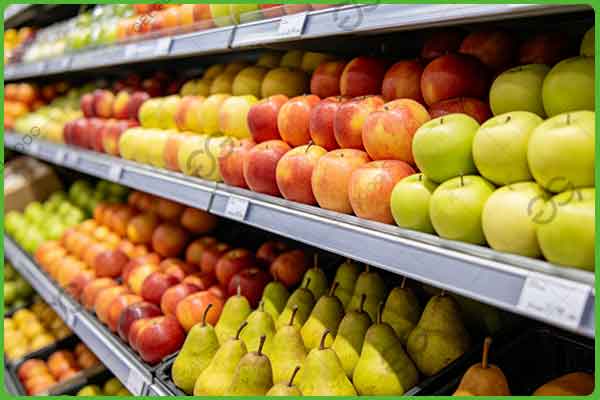
What is the purpose of sorting in fruit processing?
- First, ensuring overall fruit quality and food safety is paramount. During the stages of growth, harvesting, and transportation, it is inevitable that some fruit will suffer from rot, mechanical damage, or issues related to improper ripeness (under- or over-ripeness). If sorting is not performed, substandard fruit mixed in with the raw material can lead to the spread of decay, shorten the shelf life of the finished product, and create food safety risks. The grading process allows for the removal of moldy, bruised, insect-damaged, or spoiled fruit, as well as impurities such as leaves and soil; this ensures that raw materials meet international food safety standards and eliminates risks associated with downstream processing and final sales.
- Secondly, standardized classification and differentiated utilization are implemented. Different processing scenarios and sales markets impose strict requirements regarding fruit specifications. High-quality fruit is suitable for the premium fresh retail and export markets, commanding higher profits; fruit with minor surface blemishes but edible interiors can be used for deep processing into products such as juice, jam, or dried fruit; while severely damaged fruit is discarded. This graded utilization model significantly enhances the overall utilization rate of fruit raw materials and maximizes value.
- Third, improve processing line efficiency and reduce production costs. Graded fruit offers greater uniformity in size, ripeness, and flesh texture, facilitating the stable operation of downstream automated processes such as washing, peeling, slicing, and packaging. This prevents processing failures and equipment jams caused by inconsistent raw material specifications, thereby reducing processing losses and enhancing the overall automation level and production capacity of the line.
- Finally, it meets the requirements for standardization in international trade. Established quality grading standards exist for the global trade of fresh fruit and the export of processed fruit products. Standardized grading enables products to comply with the quality certification systems of various countries and regions, unifies product specifications and packaging requirements, facilitates cross-border transport, retail display, and market regulation, and enhances the products’ competitiveness in the international market.
General Standards for Fruit Grading
Fruit processing and trade generally employ grading systems established by international agricultural organizations and regional regulations (exemplified by EU standards). Grading criteria encompass sensory attributes, internal quality, and safety indicators.
The first category covers appearance and physical attributes, serving as the most fundamental basis for sorting. These include fruit size, weight, shape, color uniformity, and surface cleanliness and integrity. International standards establish specifications based on fruit diameter or individual fruit weight, depending on the specific variety.
The second category encompasses internal quality and maturity indicators, which are central to determining fruit grade. As global processing standards evolve, internal quality is no longer assessed solely by appearance. Key indicators include soluble solids (sugar content), total acidity, the sugar-to-acid ratio, fruit firmness, and maturity uniformity.
The third category consists of safety and hygiene indicators, representing the baseline requirements for grading. All fruit intended for export or commercial processing must comply with international food safety regulations and be free from rot, spoilage, pest residues, and off-odors. Fruit affected by disease, pest damage, or mold is completely eliminated during the sorting process to ensure the final product meets the food regulations of various countries and satisfies consumer safety requirements.
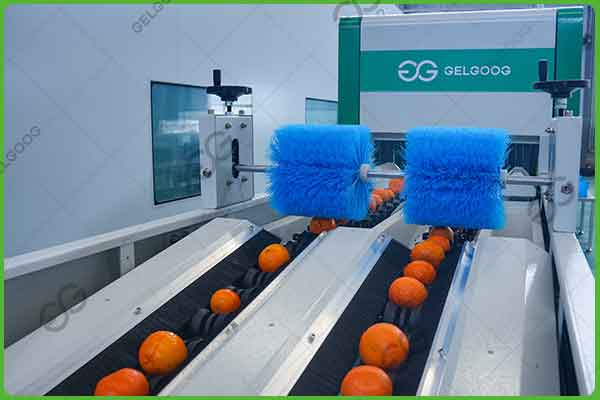
Core Equipment: Fruit Sorting Machines
Modern fruit processing has moved beyond inefficient and imprecise manual sorting; fully automated fruit sorting machines have become the core equipment for standardized sorting. Integrating optical sensing, image recognition, weight detection, and automatic sorting technologies, these machines enable high-volume, high-precision, fully automated sorting and are widely used in processing lines around the world.
Mainstream sorting machines on the international market fall into three categories based on their functions.
The first type is the size and weight sorter, which accurately classifies fruit based on preset diameter and weight parameters to sort by specification; this type is suitable for spherical or elliptical fruits such as apples, citrus, and peaches.
The second type is the color and appearance sorter, which utilizes high-definition imaging systems to identify surface defects—such as color variations, scars, and bruises—and automatically rejects substandard fruit, delivering detection results superior to manual sorting.
The third type is the multifunctional, integrated intelligent sorter, which is the mainstream choice for high-end processing lines. Capable of simultaneously assessing appearance, internal sugar content, acidity, firmness, and internal defects, it evaluates multiple metrics in a single pass and automatically assigns grades based on international standards.If you would like to learn more about sorting equipment, please contact us.