
Apples can be consumed fresh or processed into a variety of products, such as juice, apples puree, dried apples, apple jam, and canned apple. For apple processing plants, raw material handling is a critical stage in the production workflow, and the washing of apples is an essential step that cannot be overlooked. So, why is it important to wash apples?
After being harvested from the orchard, apples must be collected and transported before reaching the processing plant. During this process, the surface of the fruit may become covered in soil, dust, leaves, and other impurities. If the apples are not properly cleaned before moving on to the next stages of processing, these contaminants could enter the production equipment, potentially compromising both product quality and the processing environment.
What is the purpose of washing apples?
1. To remove soil and impurities from the surface of the apples
Apples grow in a natural environment, where soil and other impurities can easily adhere to their surfaces. During the harvesting process, the fruit may also come into contact with leaves, branches, and similar debris. Washing helps remove most of the loose soil, dust, and other surface impurities, providing relatively clean raw material for subsequent processing.
2. Reducing the risk of microbial contamination
Food safety is a critical concern for food processing enterprises. During cultivation, harvesting, and transportation, apples may come into contact with contaminated soil, water sources, or tools, creating a risk of microbial contamination on their surfaces. Washing helps remove some of the microorganisms and the debris to which they are attached, thereby lowering the risk of contaminants entering subsequent stages of the processing workflow.
3. Reducing certain pesticide residues
During the cultivation of apples, growers use pesticides to control pests and diseases. After the apples are harvested, pesticide residues may remain on their surfaces. Washing can help remove some of these residues, though the actual effectiveness depends on factors such as the type of pesticide, its chemical properties, the state of the residue, and the specific washing method used.
4. Reducing the cleaning burden on downstream equipment
Apple processing typically involves a variety of equipment, such as conveyors, sorters, peelers, slicers, crushers, and juicers.
If apples are not sufficiently cleaned before entering this equipment, impurities—such as soil, grit, and leaves—can be carried into the production system, increasing the cleaning workload for the equipment. Furthermore, in some cases, hard foreign objects may cause additional wear and tear, with the specific impact depending on the nature of the foreign material and the design of the equipment.
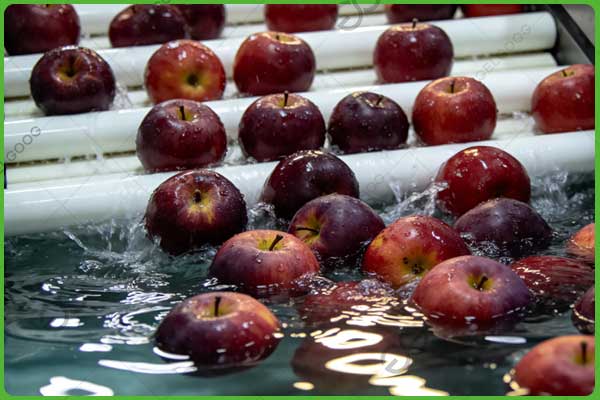
What equipment is primarily used for washing apples?
In industrial production, apples are typically washed using specialized apple washing machines. These machines are better suited for handling large volumes of apples and can be easily integrated with upstream and downstream equipment to form a continuous processing production line. Depending on the condition of the raw apples, specific processing requirements, and production capacity needs, facilities can choose from various washing methods.
1. Bubble-type washing machine
Bubble-type washers utilize the agitation created by water flow and air bubbles to loosen and dislodge soil and impurities from the surface of the apples.
2. Spray-type washing machine
Spray-type washers use nozzles to direct water onto the surface of the apples, helping to rinse away loosened impurities.
4. Brush-type washing machine
Brush-type washers employ rotating brushes that come into contact with the surface of the apples to help remove adhering dirt.
These cleaning methods are not limited to standalone use. In certain industrial processing operations, facilities may combine multiple cleaning techniques—tailored to the condition of the raw materials—to meet specific production requirements.If you would like to know the specific details for each cleaning machine, please leave us a message.